


04
oct
2023
The Basque Country will be attending Adaptation Futures 2023, the worlds leading conference devoted to climate change adaptation
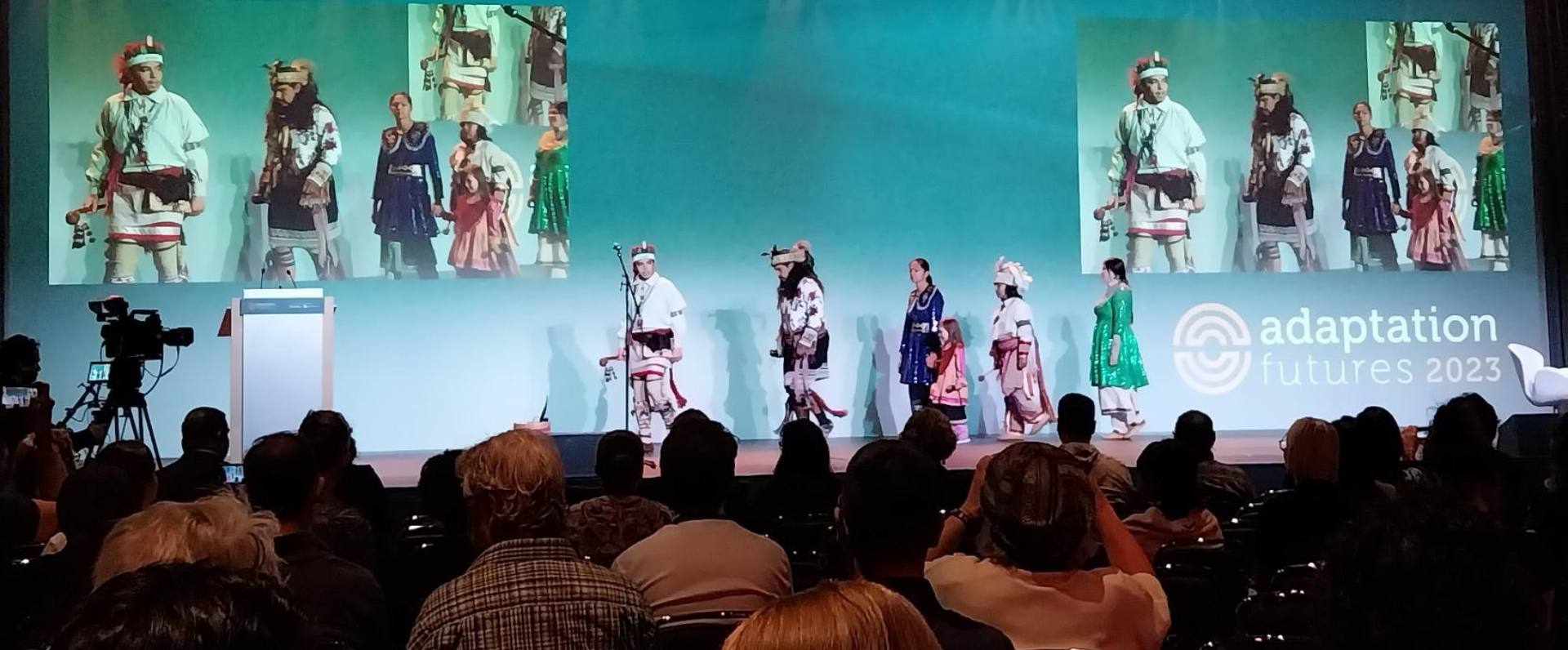
The seventh edition of the "Adaptation Futures 2023" international conference will be held from 2nd to 6th October in Montreal (Canada), which will be attended by more than 1,500 specialists in climate change and adaptation worldwide
Adolfo Uriarte, Director of Natural Heritage and Climate Change in the Basque Government, will take part in the session devoted to measuring the performance of nature-based solutions, in which he has presented the planning and financing instruments that have enabled more than 60 adaptation projects to be implemented in different Basque municipalities to address the impact of climate change. Uriarte ha highlighted three projects. Firstly, the comprehensive refurbishment of a school in the municipality of Oñati (12,000 inhabitants), which has incorporated a series of natural solutions, such as the replacement of conventional toilets with dry toilets; the construction of two horizontal flow basins for water purification; and the installation of thatched external thermal insulation composite systems (ETICS) on the main façade and a green roof.Secondly, the renaturalisation of the 23,500 m2 river environment in the municipality of Errenteria (40,000 inhabitants). This area is under 6 roads in an environment of high natural value, with emblematic species, such as the Atlantic salmon and several species of bats. The project has combined various natural solutions, such as the inclusion of vegetation and trees, to deal with the heat, and has restored the banks with a system of drainage ditches and organic fibre blankets to prevent flooding in the event of extreme rainfall.
Finally, it has focused on the coastal municipality of Bakio (2,500 inhabitants), where a river has been cleaned and renaturalised to create a marsh and a floodable river park.
Basque Country and vulnerable communities
The Basque Government will present its experience in the application of nature-based solutions in municipalities and the integration of gender in public climate change policies
Furthermore, in the session devoted to the integration of knowledge of the most vulnerable communities in the planning and design of actions for adaptation, organised by Regions4, the network of Regional Governments for Sustainable Development, Dafne Mazo, a technician from the Department of International Relations area at the Ihobe public company, has presented the report on climate change and gender, recently published by this entity in collaboration with Emakunde, which analyses the causes, effects, leadership and participation in climate action from a gender perspective.
According to this study, men and women contribute unequally to climate change, conditioned by social norms and gender roles, which imply differences in the patterns that men and women replicate in their lifestyle and consumption habits and even in their way of seeing and relating to the planet and its resources. The report, available on the Ihobe website, sets out 4 major challenges, broken down into around twenty key actions, to ensure the gender perspective in climate action and energy transition in the territory.
The first of these challenges is to incorporate the gender approach and the eco-feminist vision into spaces for reflection and decision-making on climate change and energy transition. The second challenge highlights the need for more sustainable social and economic models that put people at the centre, ahead of economic interests. The third challenge seeks to address the need to introduce a gender perspective in climate change adaptation measures. The fourth and final challenge seeks to emphasise the need for both climate and energy transition, as well as gender and its combination to permeate the administration in a transversal way due to its importance and incidence in most socio-economic spheres.
Source: Ihobe