



The chinese region of Jiangsu and the Basque Country have signed an agreement in Dubai to share climate change, biodiversity and circular economy policies
20% of Basque companies set up in China are in Jiangsu, mainly in the automotive, advanced manufacturing technologies and energy sectors
The Chinese province of Jiangsu has nearly 85 million inhabitants and is one of the country's most developed. Nearly 20% of Basque Companies set up in China are in Jiangsu, mainly in the automotive, advanced manufacturing technologies and energy sectors. The household appliance, bioscience, steelmaking and chemical industry are also represented. The first agreement to develop friendly relations between Jiangsu and the Basque Country was signed by Lehendakari, Iñigo Urkullu, the Basque Premier, in 2019, and has led to this new agreement.The Basque Country and Jiangsu will arrange those visits between the parties to identify the areas where successful results are being obtained, in order to share experience and technology with both parties reciprocally sending experts, along with the joint development of research projects.
They will also jointly organise seminars and meetings on advanced technologies in order to share methods and experiences, mainly in the preparation of policies and plans to address climate change, protect biodiversity and the circular economy.
Coinciding with the signing of this agreement, Jiangsu province is today hosting a panel in the China pavilion, where the Basque Country will take part represented by the Basque Government's Natural Heritage and Climate Change Director, Adolfo Uriarte; he will outline the best climate change adaptation practices set out in the Basque Country's Adaptation Road Map in different Basque municipalities.
Scotland, Sao Paulo and Paris
The Basque Government is strengthening its international presence with bilateral relations with Scotland on energy transition and the implementation of wind energy, with Sao Paulo on the impact of climate change on the coast and with Paris on the renaturalisation of cities
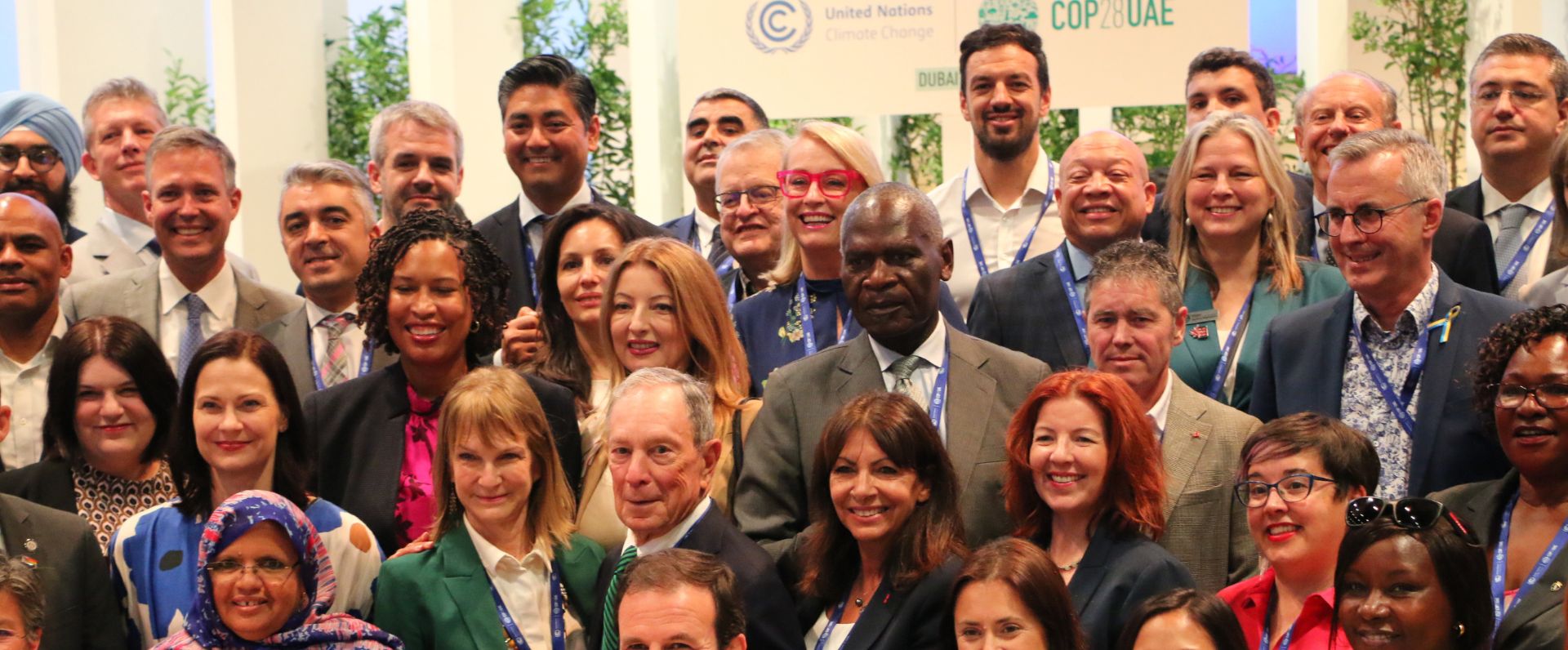
During the working days of the COP, there are numerous opportunities for dialogue and learning. According to the Deputy Minister for Environmental Sustainability, Aitor Aldasoro, "we share similar concerns, and despite the peculiarities of each country, we have common climate challenges and concerns". This is why the Basque Government is strengthening its international presence with bilateral relations with Scotland in the field of energy transition and the implementation of wind power. This is a relationship that goes back years, fostered between Minister Arantxa Tapia and Nicola Sturgeon at the COP in Glasgow. Now in Dubai, with the Scottish First Minister Humza Yusaf at the helm, various meetings have been held to accelerate the transition to renewables.
Collaboration with the government of Sao Paulo has also been deepened. The Deputy Secretary for the Environment, Jônatas Souza da Trindade, showed interest in the adaptation plan that the Basque Country is implementing on the Cantabrian coast, as well as sharing experiences in traffic management and emissions. Finally, Euskadi was able to learn first-hand about the renaturalisation policies of the city of Paris promoted by the team of Mayor Anne Hidalgo.
.JPG)
The Basque Country is demanding more climate financing
The Basque Country is participating in the COP debate and has actively intervened in the General Assembly of the Under2 Coalition to demand greater funding for climate action at local and regional level
Additionally, and as part of the Basque delegation's activity in Dubai, Adolfo Uriarte has spoken at the Under2 Coalition General Assembly, along with high-level policy markets, business leaders and civil society advocates to discuss the challenges and opportunities in the field of climate, along with defining the challenges of the coalition for 2024.Financing climate action was at the heart of the discussions. According to Under2 Coalition, roughly 50 billion in incremental investments will be needed up to 2050, in order for the world economy to achieve net zero emissions and avoid a climate catastrophe. New financing structures are therefore required, and which combine different private and public capital to bridge the investment gap.
Uriarte thus stressed that "the regions must part of international negotiations, but not from a perspective of belonging to the countries, but rather as individual stakeholders, so that the most advanced ones on the decarbonisation pathway can lead and catalyse those negotiations, along with serving as an example for those stakeholders who have further to travel. On the one hand, this would foster cooperation between regions and, on the other hand, give impetus to the path towards just and equitable solutions".
The Under2 Coalition is the largest global network of states and regions committed to achieving zero net emissions by 2050. The coalition currently represents 173 states, regions, provinces and subnational governments, along with other national and subnational entities, which account for over 50% of the global GDP.
The General Assembly lasted all day, when thanks to a broad agenda, national and subnational leaders discussed the most effective solutions for provide market and economic changes aimed at cutting emissions and adapting to climate change. Uriarte specific took part in two panels, which addressed the 'food footprint' of climate, and the financing of the climate actions of the subnational governments.
The Basque Governments calls for regions to be taken into account due to their proximity of the impacts of climate change, along with their greatest ability to deploy specific resources and actions when assessing the envisaged greenhouse gas reductions of each country pursuant to the UN Framework Conventions on Climate Change (UNFCCC).
Source: Ihobe