



16
jun
2022
The global network Regions4 chaired by the Basque Country looks towards a resilient future where regional governments run the fight against climate change
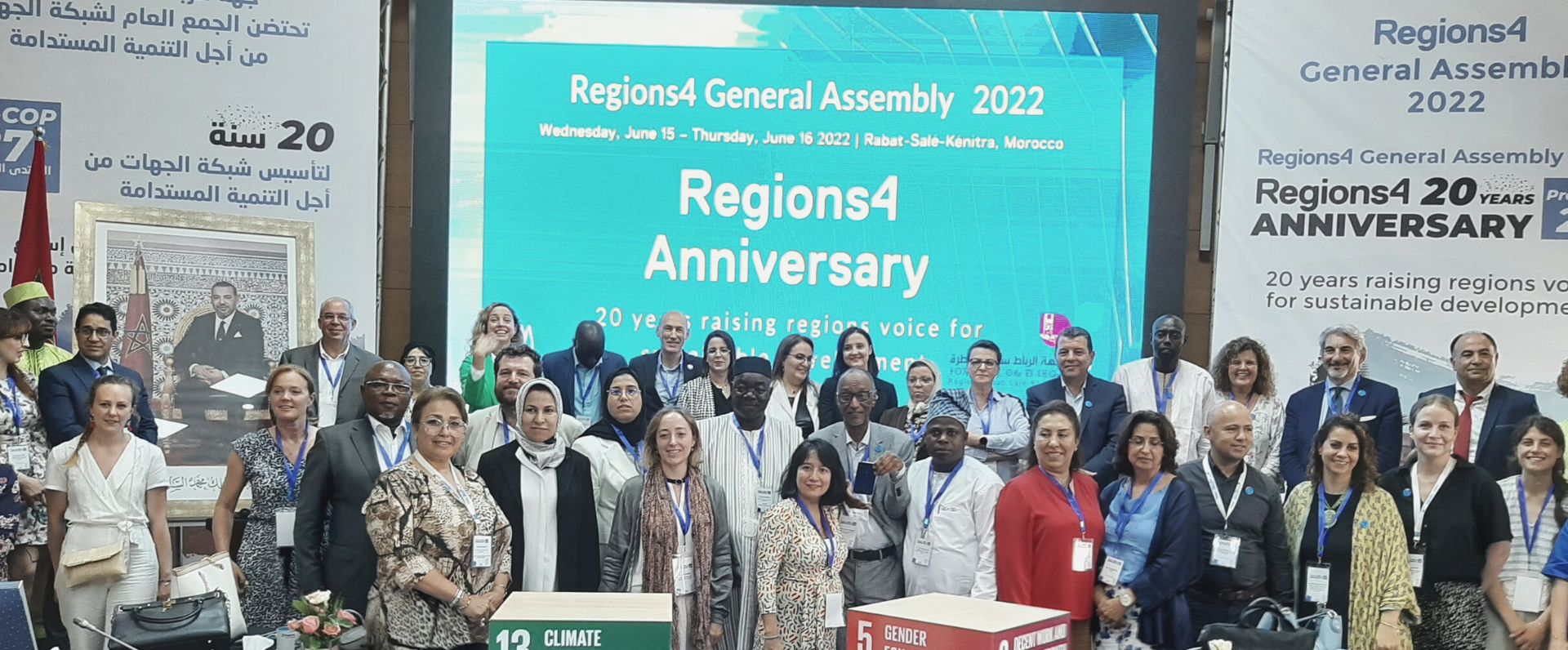
"We are celebrating 20 years of Regions4, the network of regional governments for sustainable development. An alliance that brings together nearly 200 regions to work collectively in the search for solutions to the great global challenges: climate crisis, biodiversity loss and sustainability. Our political advocacy, cooperation and action in our territories are the basis for leading a truly transformative global governance, with solidarity and sustainable development as fundamental pillars", said Arantxa Tapia, Minister for Economic Development, Sustainability and Environment of the Basque Government and President of Regions4.
In this High-Level session, regions will continue to look to the future by talking about work plans, governance and strategy, all to ensure that the first line of action in the face of climate change is heard in the international framework. World is not the same as it was 20 years ago, but the agendas that Regions4 chose to prioritize then are today, if we may say, even more relevant: recognition of the climate emergency is increasing, also the ownership of 2030 Agenda by different stakeholders, and adaptation is gaining recognition traction and interest. Agendas that we Regions4 have been pushing for are well positioned for some years now, General Secretary of Regions4, Natalia Uribe, has said in press conference this morning.
This session will discuss the current state of adaptation and resilience to climate change, and the importance of regional leadership in achieving global goals. It will analyze the political opportunity to influence the adaptation goal and processes of COP27, and its connection with other key processes such as the new Global Biodiversity Framework and the review of the UN High Level Political Forum on SDG 14, on oceans, and SDG 15, on terrestrial ecosystems.
.jpeg) Todays speakers will include Regions4 Secretariat; Local Climate Adaptive Living Facility (LoCAL) - United Nations Capital Development Fund (UNCDF); Green Deal Going Local working group - ENVE commission of the Committee of European Region; Secretariat of the Convention on Biological Diversity; as well as ministerial representatives of the governments of Rabat-Salé-Kénitra (host), the Basque Country, La Rioja, Jalisco, Catalunya, Senegal and Scotland. The session will be moderated by Natalia Uribe and Alexander Boto, Director General of Ihobe-Basque Environment Agency.
Todays speakers will include Regions4 Secretariat; Local Climate Adaptive Living Facility (LoCAL) - United Nations Capital Development Fund (UNCDF); Green Deal Going Local working group - ENVE commission of the Committee of European Region; Secretariat of the Convention on Biological Diversity; as well as ministerial representatives of the governments of Rabat-Salé-Kénitra (host), the Basque Country, La Rioja, Jalisco, Catalunya, Senegal and Scotland. The session will be moderated by Natalia Uribe and Alexander Boto, Director General of Ihobe-Basque Environment Agency.
The role and implications for regions will be assessed, and a high-level dialogue on the positioning of regional governments within international debate will be facilitated, looking at best practices and pathways for resilience that can inform global international processes and global stock takes on adaptation and the Race to resilience. Regions are calling to strengthen the inclusion of subnational governments in the decision making, the implementation and monitoring processes as key governments stakeholders. We have reliable, ambitious goals and long-standing results in the field of sustainable development and climate resilience. We are calling to ensure the multilevel governance and radical collaboration at international, national and local levels, joining the broader efforts of the UNFCCC Race to Resilience and Race to Zero campaigns, Minister of Environment and Climate of Lombardy, Raffaele Cattaneo, has said.
A draft joint declaration will also be presented, the 'Declaration of Rabat-Salé-Kénitra of Regional Governments towards COP27'. After a process of contributions and the signature by the regional governments, this document will be presented at the summit in Sharm-El-Sheik (Egypt), which will take place from the 7th to 18th of November 2022.
The COP27 will also be a moment to take stock, through the global climate stock take, on progress in the implementation of climate commitments from parties and non-party stakeholders, on both mitigation and adaptation. Regional governments, through Regions4, will be present to share their messages, input in the dialogues, and underline the key enabling conditions and successes experienced at the regional level that can be replicated in other regions or at the national level, to move the needle towards a resilient future.
This year 2022 is not only the 20th anniversary of Regions4, but also the 50th anniversary of the United Nations Conference on the Human Environment held in Stockholm in 1972, in which the United Nations Environment Program (UNEP) was created. As well as the 30th anniversary of the United Nations Conference on Environment and Development held in Rio de Janeiro in 1992, which was the first step towards the United Nations Framework Convention on Climate Change (UNFCCC).
The Regions4 High-Level session is taking place in Africa, as the COP27 will, so it will be the perfect setting to engage the African regions and share their vision about how international cooperation efforts can be reformulated.
This event can be followed live through this link. It will start at 3.00pm (GMT+1, Rabat time).
The role of the regions is paramount
Regions are demonstrating that they are crucial to deliver the internationally agreed goals on climate, biodiversity and sustainable development: in fact, they lead up to 75% of mitigation measures and up to 90% of adaptation measures to climate change. Regions4 is their voice in UN negotiations, European Union initiatives and global discussions in these areas. It was born in 2002 at the World Summit in Johannesburg as the Network of Regional Governments for Sustainable Development (nrg4SD) and, in 2019, became Regions4.In this High-Level session, regions will continue to look to the future by talking about work plans, governance and strategy, all to ensure that the first line of action in the face of climate change is heard in the international framework. World is not the same as it was 20 years ago, but the agendas that Regions4 chose to prioritize then are today, if we may say, even more relevant: recognition of the climate emergency is increasing, also the ownership of 2030 Agenda by different stakeholders, and adaptation is gaining recognition traction and interest. Agendas that we Regions4 have been pushing for are well positioned for some years now, General Secretary of Regions4, Natalia Uribe, has said in press conference this morning.
This session will discuss the current state of adaptation and resilience to climate change, and the importance of regional leadership in achieving global goals. It will analyze the political opportunity to influence the adaptation goal and processes of COP27, and its connection with other key processes such as the new Global Biodiversity Framework and the review of the UN High Level Political Forum on SDG 14, on oceans, and SDG 15, on terrestrial ecosystems.
Todays speakers will include Regions4 Secretariat; Local Climate Adaptive Living Facility (LoCAL) - United Nations Capital Development Fund (UNCDF); Green Deal Going Local working group - ENVE commission of the Committee of European Region; Secretariat of the Convention on Biological Diversity; as well as ministerial representatives of the governments of Rabat-Salé-Kénitra (host), the Basque Country, La Rioja, Jalisco, Catalunya, Senegal and Scotland. The session will be moderated by Natalia Uribe and Alexander Boto, Director General of Ihobe-Basque Environment Agency. The role and implications for regions will be assessed, and a high-level dialogue on the positioning of regional governments within international debate will be facilitated, looking at best practices and pathways for resilience that can inform global international processes and global stock takes on adaptation and the Race to resilience. Regions are calling to strengthen the inclusion of subnational governments in the decision making, the implementation and monitoring processes as key governments stakeholders. We have reliable, ambitious goals and long-standing results in the field of sustainable development and climate resilience. We are calling to ensure the multilevel governance and radical collaboration at international, national and local levels, joining the broader efforts of the UNFCCC Race to Resilience and Race to Zero campaigns, Minister of Environment and Climate of Lombardy, Raffaele Cattaneo, has said.
A joint declaration to the world
A draft joint declaration will also be presented, the 'Declaration of Rabat-Salé-Kénitra of Regional Governments towards COP27'. After a process of contributions and the signature by the regional governments, this document will be presented at the summit in Sharm-El-Sheik (Egypt), which will take place from the 7th to 18th of November 2022.
The COP27 will also be a moment to take stock, through the global climate stock take, on progress in the implementation of climate commitments from parties and non-party stakeholders, on both mitigation and adaptation. Regional governments, through Regions4, will be present to share their messages, input in the dialogues, and underline the key enabling conditions and successes experienced at the regional level that can be replicated in other regions or at the national level, to move the needle towards a resilient future.
A year of highlights
This year 2022 is not only the 20th anniversary of Regions4, but also the 50th anniversary of the United Nations Conference on the Human Environment held in Stockholm in 1972, in which the United Nations Environment Program (UNEP) was created. As well as the 30th anniversary of the United Nations Conference on Environment and Development held in Rio de Janeiro in 1992, which was the first step towards the United Nations Framework Convention on Climate Change (UNFCCC).
The Regions4 High-Level session is taking place in Africa, as the COP27 will, so it will be the perfect setting to engage the African regions and share their vision about how international cooperation efforts can be reformulated.
This event can be followed live through this link. It will start at 3.00pm (GMT+1, Rabat time).
Source: Ihobe