



- Ecodiseño
Tapia defends a new regulation on eco-design to promote the circular economy at the European Council of Environment Ministers
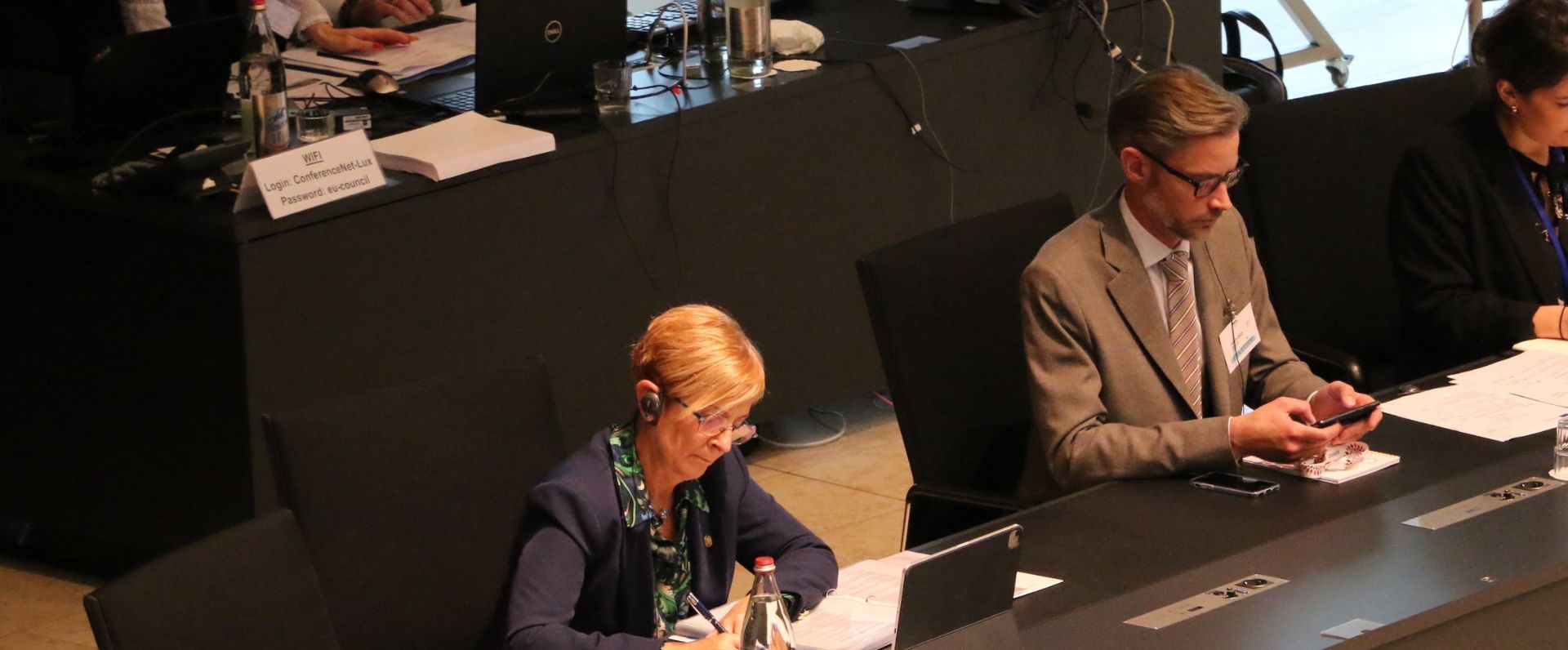
The Regional Minister was in Luxembourg this morning, where she presented the common position of the Autonomous Communities on a new eco-design framework applicable to sustainable products
The European Union recognises that current European standards do not adequately address sustainable production and consumption, which leads to increasingly divergent standards on product sustainability in different member states. In addition, product designs do not currently take environmental impacts into account throughout the life cycle, particularly aspects related to circularity, as they should. For this reason, products are often replaced and disposed of, resulting in a high consumption of material and energy resources linked to producing, distributing and disposing of them.The aim of this proposed new regulation is to reduce the negative environmental and social impacts of products and to improve how the internal market functions. Among other issues, this new framework seeks to:
- Improve the sustainability of products;
- Improve access to information on sustainability throughout the supply chain;
- Encourage more sustainable products and business models;
- Improve the implementation of the legislative framework for sustainable products.
Consequently, the new regulation seeks to transform the European economic model towards a circular economy model. But to ensure harmonisation and that the European internal market functions properly, it is necessary to lay down a common set of rules that include product requirements, both for end products and for components and intermediate products, as well as the obligation to provide reliable information to end-users.
The requirements of the new framework are aimed at improving the circularity aspects of products, covering aspects such as durability, reusability, repairability, the possibility of maintenance and reconditioning, the presence of substances of concern, resource efficiency, recycled content, the possibility of remanufacturing and recycling, and the expected generation of waste.
"80% of the environmental impacts of a product throughout its life cycle are determined in its design phase - composition, repairability, durability. Hence the importance of acting in the early design stages, in order to enhance their useful life and recycling", Regional Minister Tapia stressed during her speech.
Digital product passport
It is vital to ensure that consumption is more sustainable, and the introduction of mandatory information and labelling requirements through the new digital product passport will play a key role in this. The digital product passport is the main instrument for improving access to information on product sustainability throughout the life cycle. It will include information on a product's performance, the presence of substances of concern and information for consumers on how to install or use a product and its environmental impact.
Methods such as the European Environmental Footprint and setting up classes of product environmental performance, e.g. grading of labelling from A to G, will help consumers compare the environmental performance of products.
The common position of the Autonomous Communities presented by Tapia at the EU Council highlights, among other things, the need to:
- ensure the harmonisation and smooth operation of the European internal market with a level playing field;
- the obligation to provide reliable information to end-users;
- phase out products with poorer environmental performance from the market, which will bring benefits such as improved durability, reliability and repairability of products;
- make the information available to actors along the value chain, through the product's digital passport;
- ensure compliance with the requirements of the regulation through market surveillance.
"It will be essential to support the entire business community throughout this process, paying particular attention to small and medium-sized enterprises, so that they can all cope with the changes arising from the new requirements. Companies that use more sustainable production will gain a larger share of the EU market and increase their competitiveness," Tapia pointed out in her speech.
The Regional Minister also alluded to public procurement and contracting, noting that "as public administrations, it is up to us to be exemplary in the framework of green public procurement. This requires common guidelines".
The new European directives and the progress made by the Basque Country in the circular economy will be one of the central themes of the Basque Circular Summit, the most important event on circular economy and eco-design in Southern Europe, which is expected to bring together more than 500 specialists in the field at the Ficoba exhibition centre between November 23 and 25.
Fuente: Ihobe