



- Comunicación ambiental
The 2024 Environmental Communication School stresses the need to "rally citizens to action" in the face of environmental challenges
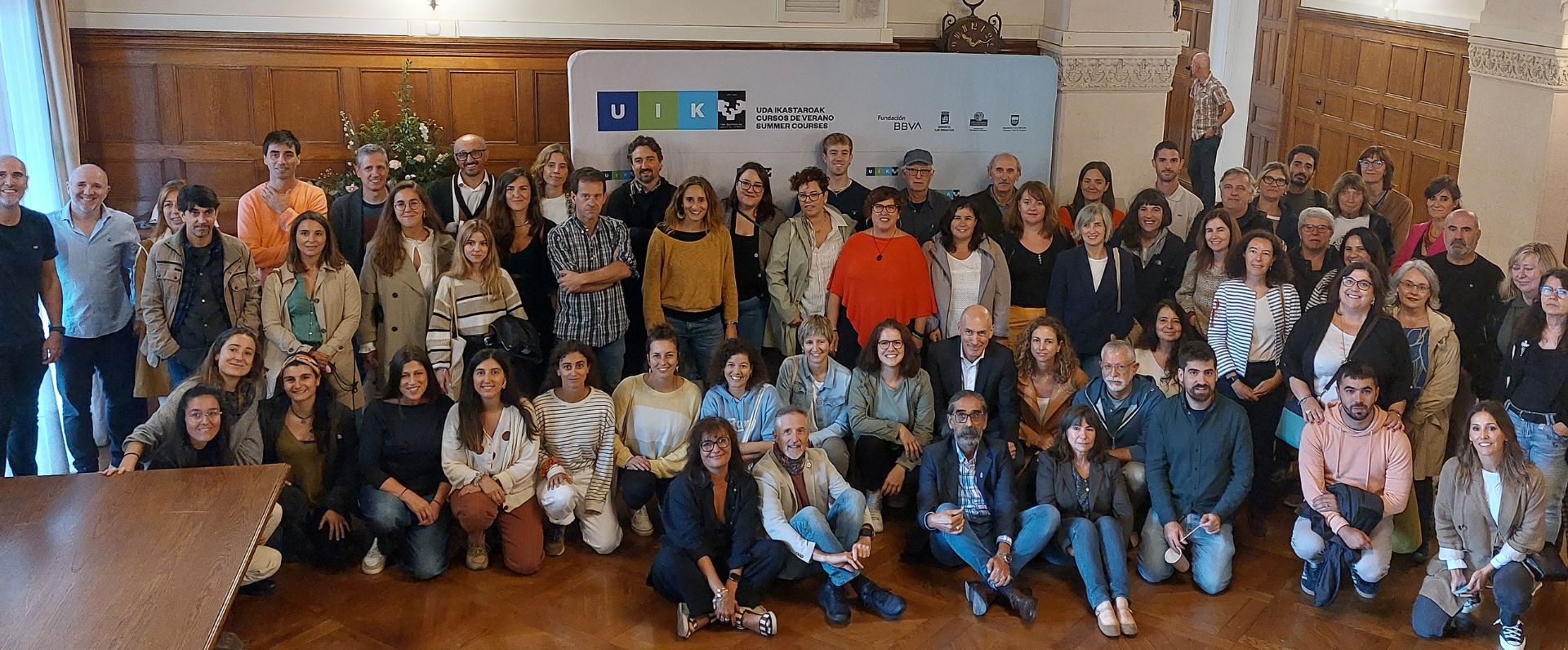
"The Environment Communication School is a discussion forum that asserts communication's role as a tool to empower citizens"
During the opening of the 2024 Environmental Communication School, Alexander Boto Bastegieta, Ihobe's General Manager, stressed the importance of the medias role to get society to embrace environmental challenges and those arising from the current climate emergency. Organised by Ihobe the Basque Government's Environmental Management Agency and the Association of Environmental Information Journalists (APIA) the sixth 2024 Environmental Communication School delved further into citizen empowerment in terms of the climate crisis and other environmental challenges.
With a brand new format focusing on dialogue, the forum for discussion and reflection was held at the Miramar Palace in San Sebastián and in online format as part of the Summer Courses of the University of the Basque Country (UPV/EHU) and of the Donostia Sustainability Forum; over a dozen experts with a track record in the environment were present. During their speeches, the School's co-directors María Garcia de la Fuente, the APIA Chair, and Yolanda Rodríguez Couso, the strategic communication manager at Ihobe expressed their appreciation of the fundamental role that specialists of such stature play to foster greater social awareness that lead to greater citizen engagement in the energy and climate transition.
Inspiring conservations, a co-creation workshop and boat trip
The first conversation entitled It's not too late was an optimistic counterpoint to the current situation. The talk, moderated by the journalist Adela Úcar, included input from the scientific proponent Javier Peña, who spelt out some of the key pointers to communicate the climate emergency in order to solve it, as he is showing in Hope!, a social media communication project that has two and a half million followers. He was accompanied by Fernando Valladares, a CSIC scientist and university professor, who detailed certain aspects of how human activity impacts ecosystems and biodiversity.
The following roundtable focused on communication as an essential tool to drive citizen action regarding climate change. Yayo Herrero a consultant, researcher and teacher, with extensive experience in dissemination offered her view on political ecology, ecofeminism and education for sustainability of life. The discussion included the conservationist perspective of Asunción Ruiz Guijosa, theSEO/BirdLife executive director, based on her experience of the environmental state of Spain's different spaces, such as the Natura 2000 network. The panel was moderated by Rafael Ruiz Peña, a journalist specialising in the environment and coordinator of theEl Asombrario magazine.
The challenge of giving impetus to a citizen assembly and the climate pact in the Basque Country.Mari Mar Alonso and Mari Luz Gómez, the Acción Climática Director and Ihobe Citizen Project Manager, respectively, explained the different policies implemented by the Basque Government through Ihobe, its environmental management company,to engage citizens in climate action.
The morning session ended with input from Naiara Goia Imaz, the General Manager of the Arantzazulab Social Innovation Laboratory, who focused her speech on Innovation Perspectives to Strengthen Democracy and Empower Citizens.
In the afternoon, the in-person delegates were taken on a boat trip to discover the artistic and natural environment of Santa Clara Isle and Hondalea, thanks to the support of the Cristina Enea Foundation. In turn, the online delegates took part in a Climate Mural co-creation workshop run by Stéphane Kosinski, from the Adesio consultancy firm.
As a complement to the sessions, all those attending the UPV/EHU Summer Courses at the Miramar Palace have the opportunity to see the El cambio climático no tiene gracia (Climate change is not funny) exhibition, created by the environmental magazine Ballena Blanca, where cartoonists from all over the world express their particular vision of this serious problem and its effects on health, the environment, the economy, and agriculture, among others.
Fuente: Ihobe