


- Biodiversidad
- Sostenibilidad local
- Planificación ambiental
The Basque Country is close to achieving the European Unions 2030 target with a quarter of its territory already protected
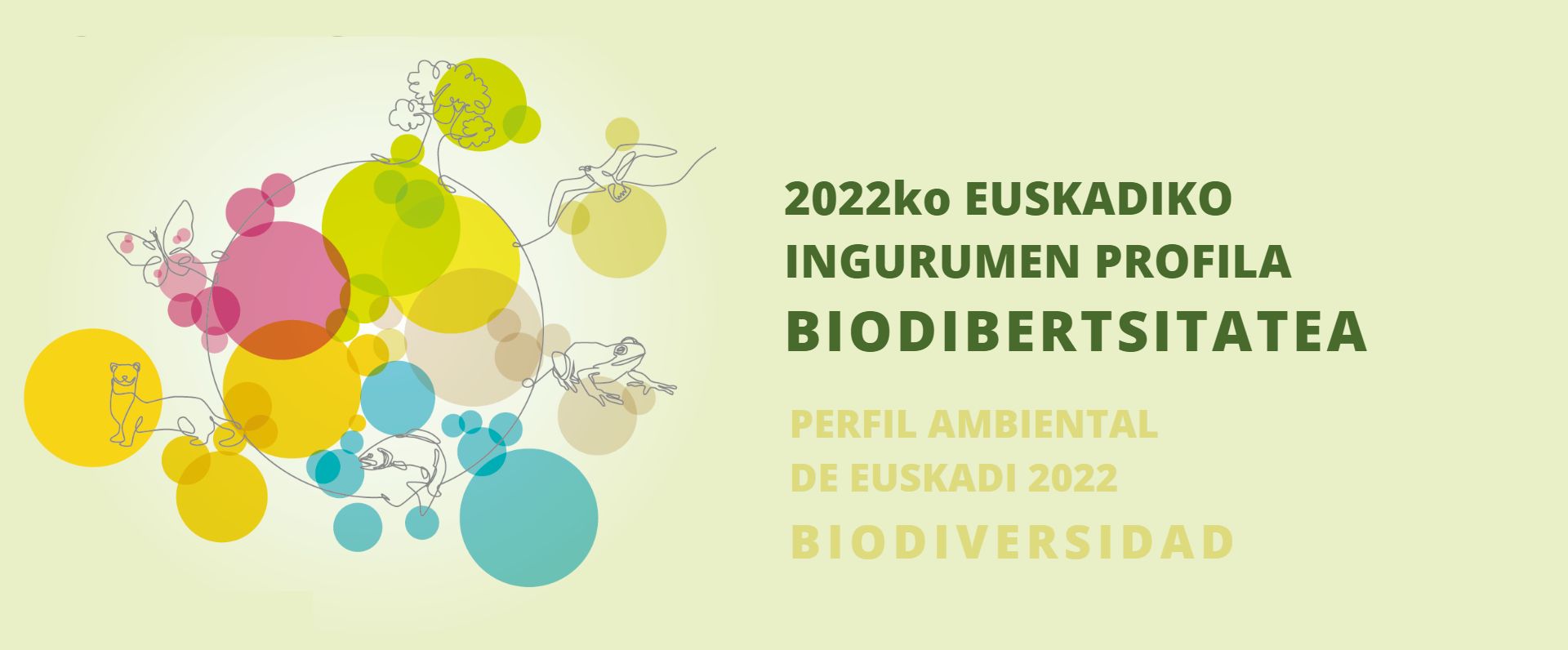
One of the main data points offered in the report is that a quarter of land in the Basque region consists of protected natural or public Basque land, demonstrating that the region is on the right road to reach the 30% target set by the European Union for the end of this decade.
Protecting biodiversity is one of the lines of work of the Basque Green Deal
The report analyses a set of 35 environmental, economic and social indicators that provide accurate information about progress made, and future challenges in terms of protection and improvements in biodiversity.
It is a new edition of the Basque Environmental Profile, published annually by the publicly-owned company Ihobe to monitor progress made with key environmental vectors and track achievement of the objectives of environmental protection policies. Thus far, Ihobe has published monographic environmental profiles on water, air, waste, climate change and contaminated soil.
Environmental indicators
Twenty-six of the 35 indicators analysed in the document are environmental, among which it is worth mentioning the analysis of protected natural areas with respect to the total area of the Basque Country, the state of conservation of habitats of interest, the state of conservation and trends of species, the integrated consumption of fertilisers, the proportion of the Basque continental platform affected by trawling, trends in atmospheric pollution and the number of hectares affected by forest fires in the Basque Country.
According to the data published in the Biodiversity Profile, almost a quarter of land in the Basque Country (24.2% or 175,330 hectares) is protected. These figures show that the region is on its way to meeting the target set in the EU Biodiversity Strategy for 2030, which requires 30% of land to be legally protected. The strategy also requires 30% of habitats and species to be in a good state of conservation, a goal already achieved by 22% of habitats of interest in the region in the 2013-2018 period.
When it comes to species, the report points out that 37% of the birds analysed have increased their populations and that 20% of other species are classified as in a good state of conservation. Particularly good results have been achieved with amphibians, reptiles and mammals, as well as bird life living in urban areas, high mountains and forests.
That said, the situation of birds living in farming areas is worrying, with a 44% decline in numbers over the last decade. Red algae biomass on the Basque coast has also shrunk by 85% in just over 25 years and the phanerogam Zostera noltii, a plant similar to posidonia, has declined by almost 10% in the last five years.
In contrast, there has been a strong increase in several species in recent years, such as forest butterflies, the European shag (with an increase of 20%) and fish like trout and gudgeon. Other species such as the minnow (a small freshwater fish) and the salmon have stabilised, while eels are still on the decline.
Social and economic indicators
The Basque Environmental Profile 2022 includes six economic indicators: Basque public investment in biodiversity, Basque companies which are members of the Spanish Business and Biodiversity Initiative, Basque land with a high proportion of ecosystem services, the percentage of nature and rural tourism among reasons for visiting the region, Protected Natural Spaces and companies adhered to European Charter of Sustainable Tourism (ECST) in Protected Areas and agrotourism with the European Ecolabel.
Regarding investment, management of the Natura 2000 network in the Basque country during the 2021-2027 period is expected to amount to 119 million euros. In this regard, according to a study conducted by the Basque Government on the Natura 2000 network spaces in the region, the economic value of the services and benefits provided by these places is seven times higher than the direct expenditure in these places. That means that for every euro invested, seven euros are returned in benefits (such as supplies, for example, the quantity and variety of products obtained from the forest or the sea) and also in regulation, as those spaces capture and store carbon, help to purify and supply potable water, control soil erosion, mitigate flood damage, improve air quality and encourage pollination.
Regarding tourism, there are some interesting findings, such as the fact that 13.9% of all visits to the Basque Country were to enjoy nature and rural tourism, a percentage which is likely to rise. Whats more, since 2021, the region has had a Protected Natural Space, the Urdaibai Biosphere Reserve adhered to the European Charter of Sustainable Tourism and 16 certified tourism companies. As well as these, there are 35 tourism lodgings with the European Ecolabel, which guarantees the absence of impacts on nature and biodiversity, among other achievements.
In terms of citizen perception, 22% of those surveyed said that extinction of species and degradation of natural spaces are the environmental problems about which they feel they lack information. However, just 3% say that biodiversity loss is the most worrying environmental issue.
Basque society believes that air and water pollution, climate change, deforestation and desertification, as well as atrophic catastrophes are the most serious threats to biodiversity. Regarding those who have heard of the Natura 2000, Ekoetxea and Parketxes networks in the Basque region, they account for 25%, 27% and 18% of those asked, respectively. The 100,073 visitors to the four centres that make up the Ekoetxea environmental centres of the Basque Government in 2019 represent an increase of 140% compared to the 41,723 visits in 2008.
Working on biodiversity
Despite occupying slightly less than 1% of land in the European Union, the Basque Country is home to approximately 35% of its habitats of interest, whose loss is a threat that must be addressed from all levels of management to improve its resilience and prevent the appearance and spread of diseases in the future. Biodiversity loss endangers food security and nutrition, exacerbates the climate crisis, and affects the economy.
In 2016, the Basque Country, through the Biodiversity Strategy of the Basque Autonomous Community 2030, established an action plan to improve its natural assets in line with European guidelines and the Sustainable Development Goals. The plan is a road map to create a resilient, responsible territory which improves the state of conservation of the natural environment.
In addition, protecting biodiversity if one of the lines of work in the Basque Green Deal, a road map produced by the Basque Government to ensure just, sustainable development in the territory, aligned with the European Green Deal. This competitive model for the future requires a new regulatory context and, in the case of the protection of the biological diversity, proposes actions such as the recent approval of the Law on Conservation of the Natural Heritage of the Basque Country, which updates the regulatory framework to bring it in line with the extensive European laws enacted in recent decades; or the Basque Environmental Framework Programme 2030, now in the pipeline, that plots the road to follow until the end of the decade.
In the international context, a global biodiversity framework that sets the rules of the game for this decade is still pending, and the guidelines to follow on the subject, which will be renewed at the coming United Nations Conference on Biodiversity (COP15), postponed since 2020 due to the pandemic and which is expected to take place this year (date still undecided).
Fuente: Ihobe