



- Planificación ambiental
- Biodiversidad
Climate scenarios: a window to the future of the Earths climate
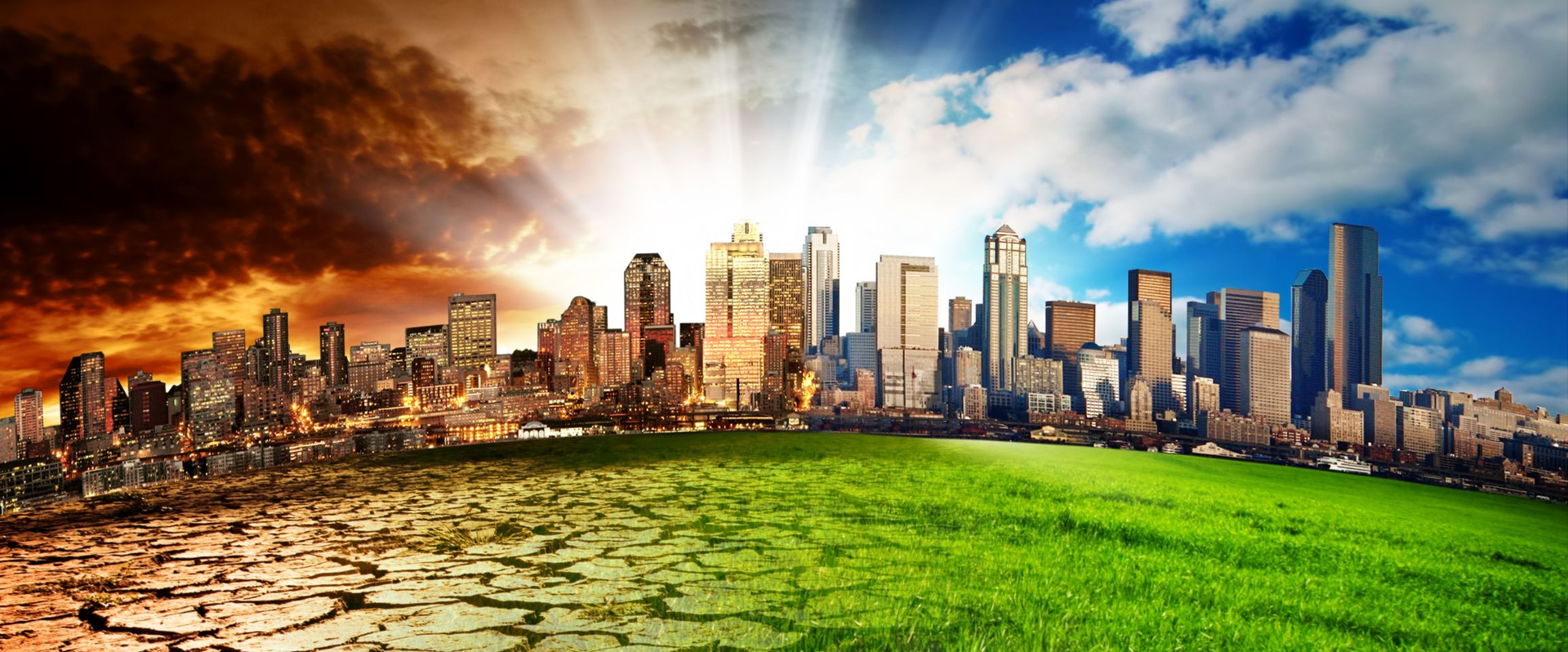
The result is a rapidly warming land surface and the unleashing of a transformation in the climate that is impossible to reverse and in the face of which it is necessary to adapt, limiting and mitigating its effects. Faced with this uncertain future, climate scenarios have become a powerful tool to analyse which measures are the most appropriate, suggesting ways forward to deal with the possible impacts of this climate change.
What are climate scenarios?
A climate scenario, as the IPCC notes, is a plausible and simplified representation of the future climate. Various resources are necessary for its determination:- Climate models capable of simulating the interactions between physical, chemical and biological processes that affect the climate.
- Emission scenarios that reflect changes to greenhouse gas emissions that could result from advances in technology, socio-economic trends, legislative regulations, or the availability of energy resources. These are what are known as representative concentration paths (RCPs).
- Climate projections, which are produced by combining climate models and emission scenarios.
- Information on the current observed climate that, ultimately, allows the recreation of a climate change scenario.
Climate scenarios are very different from weather forecasts. They are not predictions, as Gaertner, Gutiérrez & Castro (2011) note, but alternative possibilities that depend on multiple factors which are sometimes unpredictable. Some of these, included in the IPCC Fifth Assessment Report (AR5), are:
- the influence of nature;
- the impact of anthropogenic activities;
- ncomplete knowledge of the mechanisms that govern the climate and the interactions that occur between the different elements;
- and, the internal variability of the climate.
Usefulness of climate scenarios
The scenarios help to formulate policies in the field of public administration, to make decisions in the business and financial sector and to assess the threat of climate change and how to limit it. Their main use is to make it possible to carry out analysis based on what if hypotheses. For example, to observe what the consequences of maintaining current greenhouse gas emissions would be or what effect their reduction would have.
In a certain way, and apart from obvious differences, a climate scenario could be compared to a video game in which the users mission is to make cities or territories prosper through proper management.
In the following image, based on the Third Assessment Report of the Intergovernmental Panel on Climate Change (IPCC) in 2001, you can see some of the data sources that are taken into account to evaluate impacts. The yellow blocks indicate common climate scenario types, while the grey shaded part consists of components typically used to recreate climate scenarios.
.jpg)
The viewer of climate change scenarios for the Basque Country
In March 2020, Ihobe made public the viewer of climate scenarios for the Basque Country, making available to the public authorities, private entities and society as a whole a tool that allows the studying of the impact of climate change in the region and the measures that can be taken to mitigate its effects.
However, before describing the viewer itself and analysing the information that can be obtained from it, it is worth explaining why regionalised climate scenarios are important.
Regionalised climate scenarios, adapting the tools to the peculiarities of the territory
One of the main problems posed by global climate scenarios is related to scale. For a global scope, they are reliable. But when smaller scales (10-100 km) are considered, the distribution of temperature and precipitation varies. These particularities are easily appreciated when comparing the climate of the coastal areas of Bizkaia and Gipuzkoa with the interior of Álava, for example.To correct this deviation, what is known as downscaling techniques are applied. The main objective of this downscaling procedure is to incorporate specific characteristics of the territory that influence the climate, such as topography or vegetation, into the tool. At this point, the importance of starting from a validated global or general model should be emphasised, since regional scenarios cannot correct possible errors in the original sources.
It should also be noted that great effort has been made by the scientific community to create coordinated and harmonious research frameworks, work that has given rise to numerous European projects, among which the CORDEX initiative (EURO-CORDEX for the European continent) stands out. This can be defined as a multi-model ensemble of different simulations that is usually shown later in the viewers as an average.
The goals of this plan are:
- Improve understanding of relevant regional/local climatic phenomena, their variability and changes, by downscaling.
- Evaluate and improve regional climate downscaling models and techniques.
- Produce coordinated sets of small-scale regional projections around the world.
- Promote communication and knowledge sharing with users of regional climate information.
What information can be consulted in the viewer of climate change scenarios for the Basque Country?
This regionalised tool allows the querying of different variables. In this way, from the perspective of the available data, it is possible to analyse- historical values(1971-2000), obtained from AEMET and EuskalMet, and
- scenarios created in the framework of the CORDEX project (other regional simulations can also be consulted) for an RCP8.5 emission scenario. This framework, considered a continuation of business-as-usual i.e. a situation in which no concerted efforts are made to reduce greenhouse gas emissions is representative of a CO2 concentration of 936 ppm (at the time of writing of this article, values range between 412-413 ppm). Three time periods are considered:
- Short-term future (2011-2040)
- Medium-term future (2041-2070)
- Long-term future (2071-2100)
In relation to climatic variables, the viewer includes information related to temperature (maximums, minimums, heat waves, tropical nights, etc.) and precipitation (days of intense rain, consecutive dry days, etc.). The analysis of the change in the occurrence of climatic extremes, for example, is considered one of the main indicators of climatic change. It is also one of the main benefits offered by regional simulations.
From the point of view of seasonality, the viewer for the Basque Country also makes it easier to check the alternative projections for either the whole of the year or the specific seasons (spring, summer, autumn and winter).
Regarding the geographic scope, the tool allows queries by historical territories (the three provinces of the Basque Country), municipalities, neighbourhoods, river basins, etc. The selection of the different areas allows the downloading of the data in graphic or numerical format using the option View time series.
The following animation shows the expected evolution regarding the number of tropical nights with temperatures above 20°C.
Applications of the information provided by the viewer of climate change scenarios for the Basque Country
There are various sectors or production and socio-economic activities that can use these scenarios to help make decisions for the future.
Urban planning, for example, is one of the areas where this type of viewer is most useful. Not surprisingly, urban areas are obliged to adapt to the impact of climate change. Based on the results obtained, a city council, for example, could opt for increasing green spaces in order to reduce heat islands, create carbon sinks and improve drainage, redefine population densities to minimise the consumption of land and reduce emissions associated with transport, or promote policies aimed at improving energy efficiency (Verdaguer et al., 2015).
Another application of the climate scenario viewers could be to aid the construction of infrastructure. Not only will this suffer greater thermal stress (on days of severe heat, linear infrastructures experience greater expansion and equipment struggles to provide cooling), they must adapt. They will also need to be redesigned to satisfy the new demands. It is a utility where impacts are clearly visible; for example, when the resources to be managed are water or energy. In the case of water resources, first it is necessary to take into account the fact that their availability will be reduced. After all, changes in rainfall patterns are one of the main consequences of climate change. Regarding energy, it is foreseeable that an increase in demand will be observed due to the greater need for air conditioning and changes in urban mobility (increase in electric means of transport).
These simulations are also useful to identify areas that are suitable sites for solar energy installations or wind farms. It is an application that has gained in reliability thanks to scale reduction, as Stengel, Glaws, Hettinger & King (2020) point out.
Climate scenarios are, in short, a window that shows the climatic conditions that a territory could be subjected to in the future. In a way they are still a warning: a warning that demands urgent and forceful action to limit the consequences of climate change and increase resilience. This is an urgent and essential task for a planet which we should not forget had been gradually cooling down for around 6000 years up to a little more than a century ago but which now witnesses high temperature records broken year after year.
WEB TUTORIAL: VIEWER OF CLIMATE CHANGE SCENARIOS FOR THE BASQUE COUNTRY
Fuente: Ihobe