


16
feb
2024
- Ecoinnovación
- Ecodiseño
Nearly 200 Basque companies committed to circular ecoinnovation as an opportunity for competitiveness
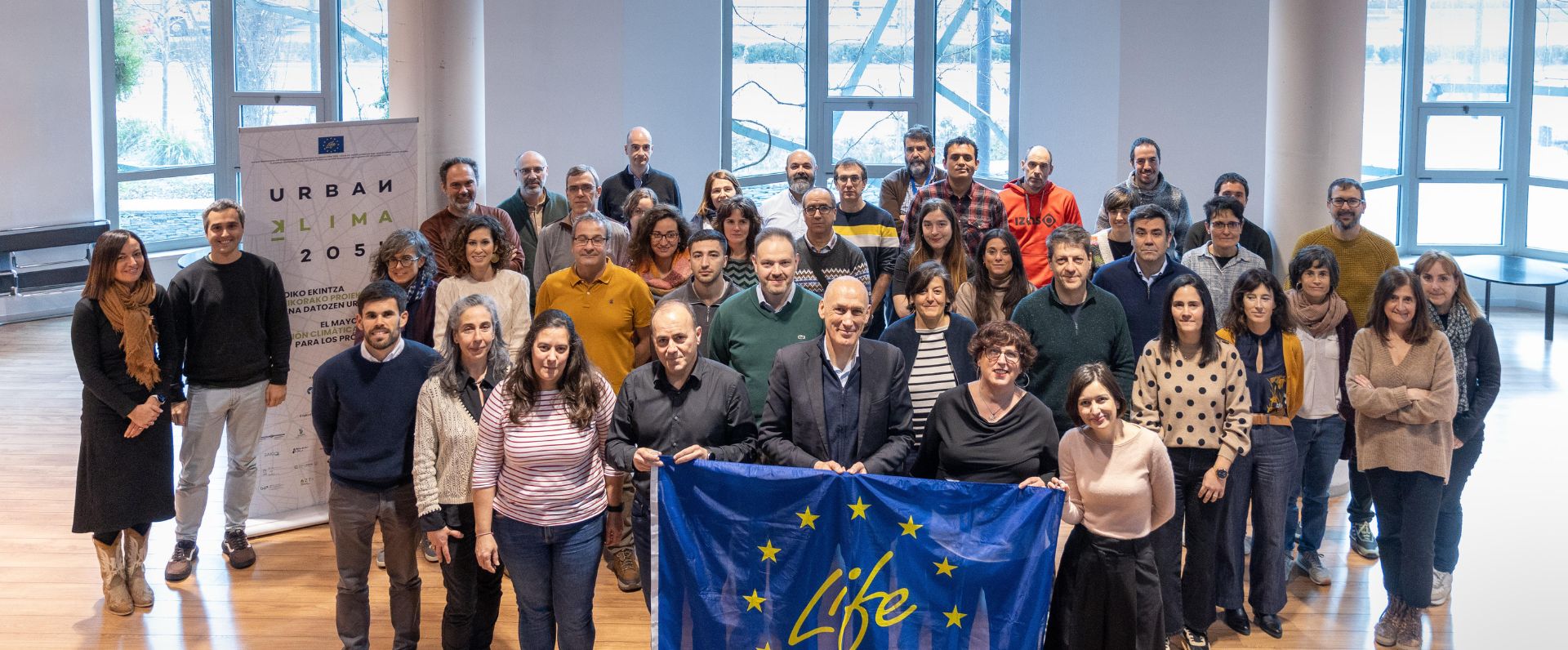
Ihobe launches the new Ecoinnovation in the Basque Country website a benchmark in Europe with business solutions for the new challenges of the circular economy
Ecoinnovative projects anticipate the new environmental challenges driven by the European Union and establish solutions to act as a model for the whole of Basque industry. The main challenges or motivating factors are the cost and supply of raw materials, better production techniques, minimising pollution, plastic, equipment ecodesign, reducing greenhouse gases, minimising waste, environmental positioning and transparency, green public procurement and extended producer responsibility. Thanks to Ihobe's mentoring of the companies, multiple projects have increased their feasibility with solutions that are available on the market.>

.jpg)
The first publication of ecoinnovative projects was presented at the Basque Circular Summit, the congress of the circular economy that was held in Irun (Gipuzkoa) in November 2022, and featured a total of 105 completed projects. After that first edition, Ihobe has published a new version on paper and in digital format with 74 new datasheets with the results of recently completed projects. This second edition coincides with the launch of the Circular website where all the projects described in both volumes can be consulted.
It is a live site and the solutions will be gradually added from the more than 30 projects that are still underway. The website allows classification by sectors, companies and motivating factors; however, the development is envisaged of an advanced search system for the results to be filtered more easily.
A website featuring successful outcomes
Even though only 24% of the new circular solutions developed or demonstrated in the projects are already operational or available on the market, "Ecoinnovation in the Basque Country" includes the results of all the projects completed and validated by the companies. Thus, the publication is a collection of datasheets that graphically depict the market, commercial, economic, technical or environmental feasibility of each project to pinpoint the barriers and needs as the focus for future R&D&i.
The new 74 implemented projects have been developed in different industrial sectors, including food, construction, energy, mobility, health, industry and tourism. Each datasheet of the projects promoted by Basque companies includes the main motivating factors for each of the projects as the result of the implementation of the new Circular Economy legislation, which amends the markets rules and generates new opportunities and risks for companies.
This publication presents the results of this Programme that, in line with the Basque Circular Economy Strategy, establishes ecoinnovation and the circular economy as priority areas. Around 7 million from the public budget have been used to boost business projects in recent years.
Specifically, each public euro invested has mobilised an additional annual turnover of 21 on the private market. According to the results of the successful projects, the companies envisage an additional annual turnover of 130 million in the coming years, along with 22 new business lines, nearly 200 new jobs, annual savings of 228,000 tonnes of greenhouse gases not emitted, and over 300,000 tonnes of waste diverted from landfill.
The specific examples of all the projects developed so far are available both in the print publications and on the new website on Ecoinnovation in the Basque Country, which has digitalised all that information. Furthermore, the results of the more than 30 projects that are currently underway will be gradually incorporated. This final goal of this Basque Government programme deployed by Ihobe is to generate local industrial solutions that anticipate the new circular policies of the European Union, by encouraging companies in this area and to make the more competitive, in the framework of the Basque Science and Technology Plan (PCTI) 2030 and co-funded by the European Regional Development Fund (ERDF) up to 2021.
Fuente: Ihobe