



- Sostenibilidad local
Udalsarea 2030 shares information and initiatives from the Law on Climate Change and Energy Transition with the municipalities affected by Low Emission Zones.
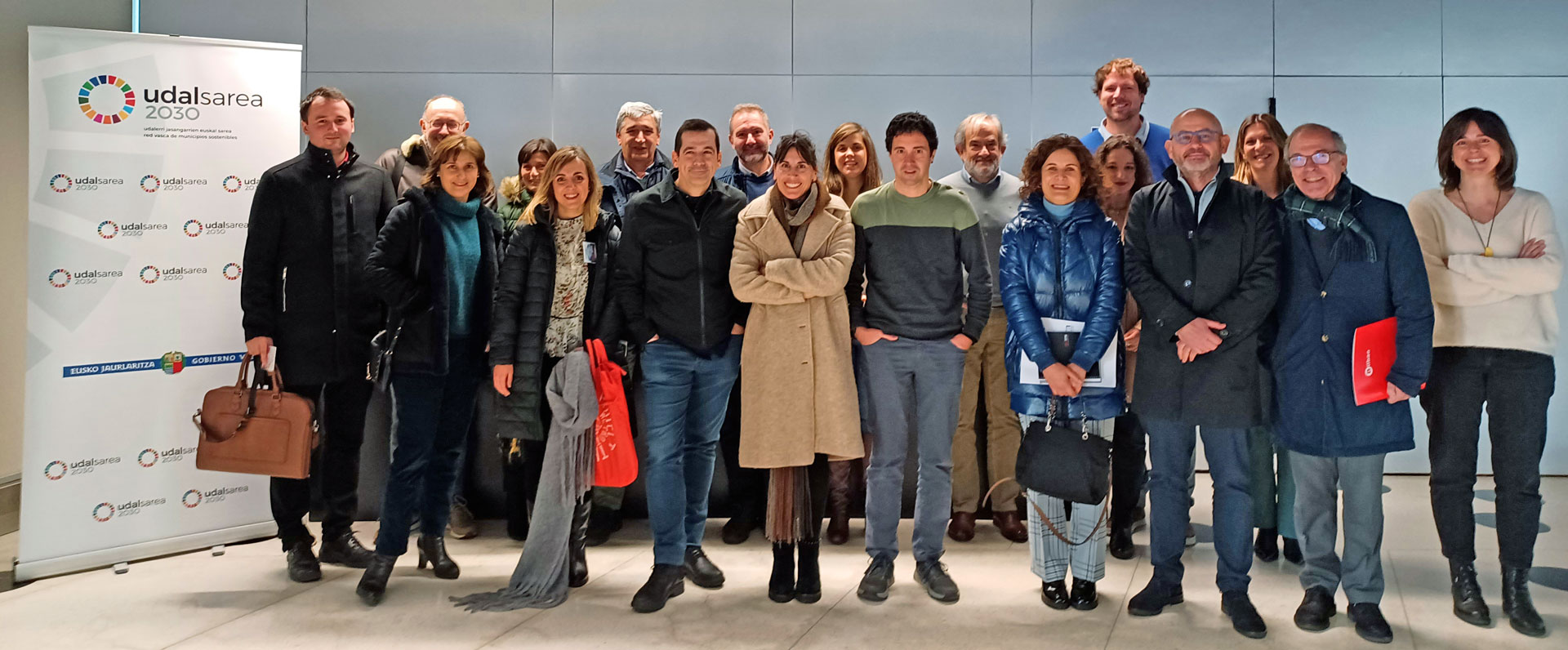
As part of its mission to help Basque municipalities and counties to achieve the Sustainable Development Goals and Agenda 2030 through transformative local initiatives, Udalsarea 2030 has held a collaborative meeting with the six Basque municipalities affected by the Royal Decree on Low Emission Zones.
Representatives from the city councils of Vitoria-Gasteiz (Álava), Barakaldo, Bilbao and Getxo (Bizkaia) and Donostia/San Sebastián and Irun (Gipuzkoa), together with experts from Udalsarea 2030, the Basque Network of Sustainable Municipalities, took part in the conference. At this initial meeting, they shared experiences, information and initiatives to improve air quality and public health, contribute to the mitigation of climate change, encourage a modal shift towards sustainable modes of transport, and promote energy efficiency in transport.
The recent approval of the Royal Decree on Low Emission Zones that municipalities with more than 50,000 inhabitants must implement affects a total of six Basque municipalities that will have to adopt sustainable urban mobility plans that introduce mitigation measures to reduce emissions from mobility, including, among others, the establishment of Low Emission Zones.
Representatives of the cities affected by the new regulation have had the opportunity to become familiar with the current regulations, explain the current situation in which they find themselves regarding the measures required, and identify common barriers in the search for possible solutions.
Similarly, the ideas behind various possible actions to rebalance the mobility model and make it more sustainable have been outlined, prioritising the cleanest and most efficient modes of transport in accordance with the "mobility pyramid".
Walking.
Travel by bicycle or other single-person means of mobility.
Measures aimed at improving and using the public transport network.
Measures to encourage the use of private electric modes of transport, alternative energies, and recharging points.
Measures to promote shared electric mobility.
The urban distribution of goods.
Work mobility plans.
Measures in areas subject to special protection: schools.
Measures to improve urban adaptation to climate change.
Contributions from the building sector.
All the municipal representatives agreed on the importance of conducting local traffic and pollution assessments to ensure that decisions on the delimitation of these Low Emission Zones (LEZs) are taken correctly.
The participants also stressed the importance of working on a communication plan to inform and raise awareness among the population and the most directly affected parties of the goals pursued by these LEZs and the benefits for people's health.
Fuente: Ihobe