



2026ko apirilaren 29a
- Ingurumen-plangintza
Ihobe reflects on climate inaction with the British Governments environment team
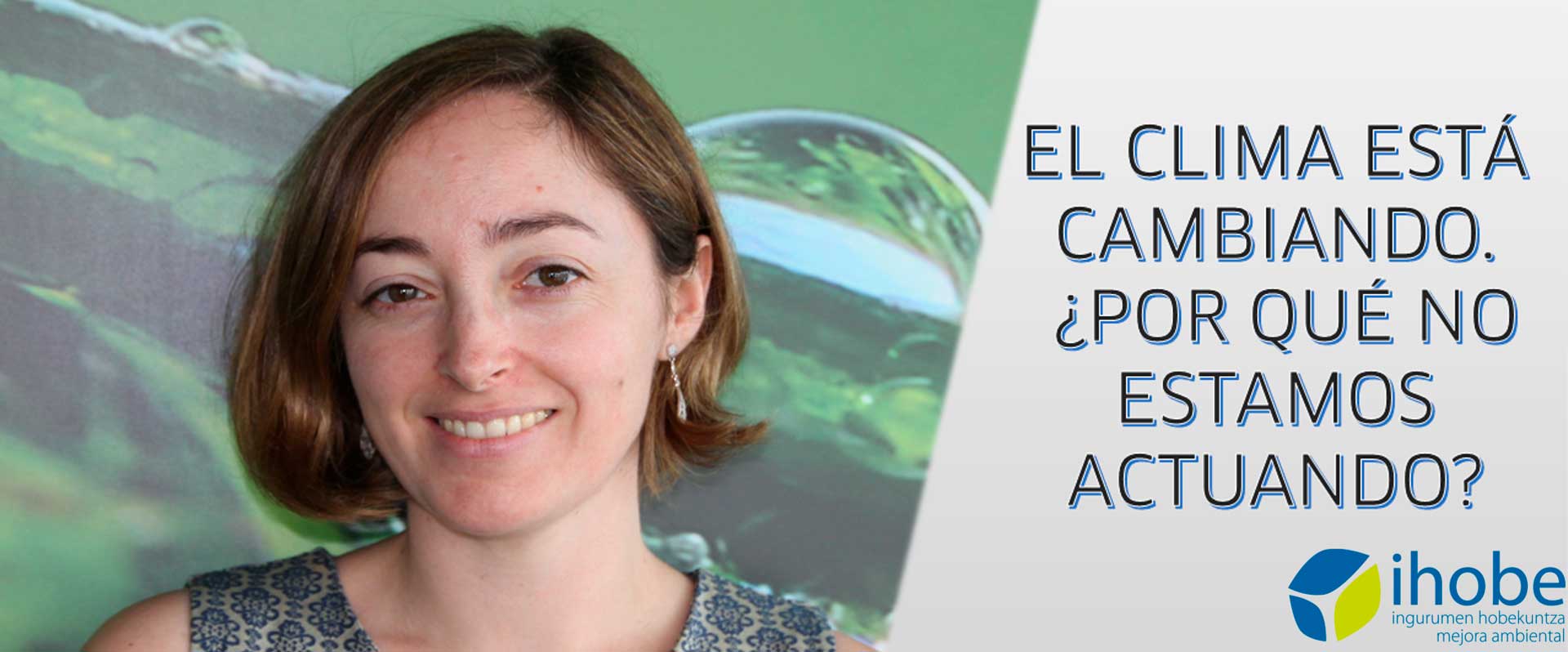
Ainhize Butrón, a climate change technician at Ihobe answered this and other questions during the Climate is Changing. Why are we not acting? online session organised by Natural England, the public agency of the Department for Environment, Food and Rural Affairs of Great Britain and Northern Ireland (DEFRA), the benchmark in the UKs climate action management.
Specifically, the session went further into the concept of inaction, by analysing the underlying psychological barriers in the context of climate change and nature conservation. The aim was to raise awareness using the dragons of inaction theory, put forward by Robert Gifford (University of Victoria, Canada).
That approach establishes that the reasons for climate change action may be due to different barriers, dubbed dragons, which affect whether or not an individual acts in pro-environmental ways depending on their personal characteristics, socio-cultural factors and the context, among others. The theory concludes that it is only by overcoming each of the dragons that the individuals behaviour can be modified so that they begin to act.
Ainhize Butron, a biologist with a PhD in Ecology, is a Climate Action technician at Ihobe, the environment agency answering to the Basque Governments Ministry for Economic Development, Sustainability and the Environment.
Ainhize Butrón, a Climate Action technician at Ihobe, gave a talk on the dragons of inaction, a theory about the psychological barriers hindering climate change actio
nAinhize Butrón shared with over 120 of the British Governments environmental technicians some of the tools that Ihobe has been working on as part of Action C.7.1. on empowering citizens of the LIFE Integrated Urban Klima 2050 project. The aim is to foster the mobilisation and empowerment of the general public for climate action. Ihobe has there worked with the Environmental Psychology team at the University of the Basque Country (UPV/EHU) on the application of different psychological theories to assess and design actions that could be a turning point in citizen empowerment.Specifically, the session went further into the concept of inaction, by analysing the underlying psychological barriers in the context of climate change and nature conservation. The aim was to raise awareness using the dragons of inaction theory, put forward by Robert Gifford (University of Victoria, Canada).
That approach establishes that the reasons for climate change action may be due to different barriers, dubbed dragons, which affect whether or not an individual acts in pro-environmental ways depending on their personal characteristics, socio-cultural factors and the context, among others. The theory concludes that it is only by overcoming each of the dragons that the individuals behaviour can be modified so that they begin to act.
Natural England is the public agency of the Department for Environment, Food and Rural Affairs of Great Britain and Northern Ireland (DEFRA) tasked with protecting and restoring the British natural environment
Ihobes aim for sharing the thoughts on this environmental psychological theory with Natural England technicians was to trigger a joint reflection on the extent they are optimising effort, within their organisation, to promote climate change action in nature conservation management. Natural England is responsible for ensuring that Englands natural environment, including its land, flora and fauna, freshwater and marine environment, geology and soils, are protected and improved. It is also tasked with helping people enjoy, understand and access the natural environment.Ainhize Butron, a biologist with a PhD in Ecology, is a Climate Action technician at Ihobe, the environment agency answering to the Basque Governments Ministry for Economic Development, Sustainability and the Environment.
Iturria:Ihobe