


2026ko ekainaren 28a
Bilbao hosts a scientific meeting of the United Nations Intergovernmental Panel on Climate Change (IPCC)
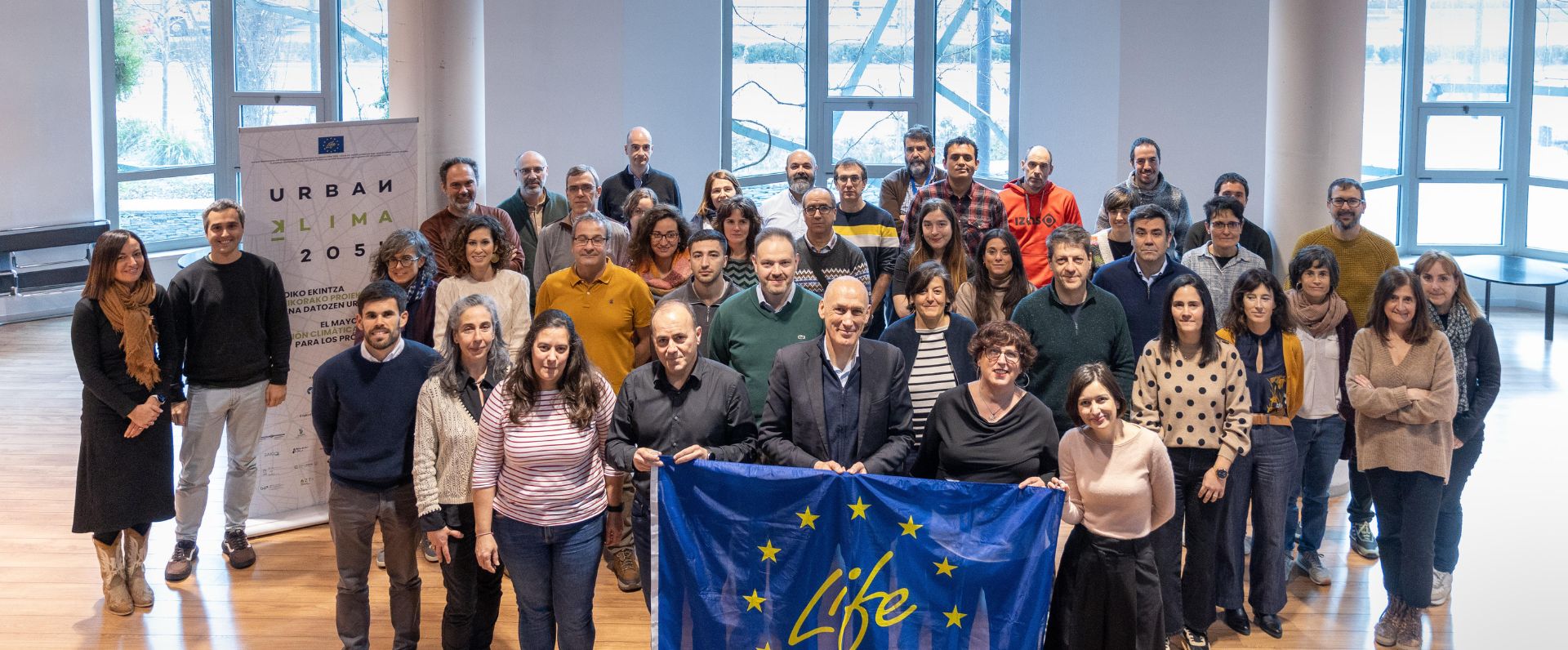
The meeting, organised by the Basque Centre for Climate Change-BC3 at its facilities in Leioa (Biscayne), was attended by Alexander Boto, general manager of the Basque Governments Publicly-Owned Environmental Management Company, Ihobe.
Science is and must continue to be a crucial source of knowledge for our policies, whether environmental or of any other type, said Alexander Boto. We need to open our eyes and pay attention to the scientific community, which is the only way to ensure that our policies are based on solid evidence.
The Intergovernmental Panel on Climate Change (IPCC) was created in 1988 through a collaboration with the World Meteorological Organization and the United Nations Environment Programme (PNUMA). Its purpose is to assess relevant scientific, technical and socio-economic information for the international community in decision-making regarding the causes, consequences and actions needed to tackle climate change.
Since its foundation, the IPCC has produced a series of Evaluation Reports on the status of our understanding of climate change, the effects, opinions regarding the response, as well as special reports, technical documents, methodologies and guidelines. As a result, IPCC publications have become benchmark reference materials in policy and science, among other areas.
In the meantime, the IPCC-TFI is the Working Group on National Greenhouse Gas Inventories. During the meeting in Bilbao, it will start preparing the Assessment Report to update the Emission Factor Database (EFDB) and thus improve the calculation of future national inventories.
The meeting has been organised by the Basque Centre for Climate Change-BC3 at its facilities in Leioa (Biscayne) with support from the Basque Governments Department of Economic Development, Sustainability and Environment. An agreement provides BC3 with 250,000 euros per year to promote research, dissemination and educational activities on climate change.
In the Basque Country, the public company Ihobe in collaboration with the Basque Energy Agency-EVE publishes the annual the Greenhouse Gas Emissions Inventory of the Basque Country, calculated following a methodology consistent with the inventory reporting guidelines of the United Nations Framework Convention on Climate Change (UNFCCC), and the methodological guidelines for estimating and calculating inventories of the Intergovernmental Panel on Climate Change (IPCC 2006 Guidelines), among others. Updating emission factor databases is a process of continuous improvement that is essential for incorporating scientific developments into emission inventories.
The last inventory, which was for 2020, confirms the downward trend in the region and is already below the path set to achieve the objectives for the year 2030. The study shows that the Basque Country reduced its emissions by 12% with respect to 2019 as opposed to the 2% reduction that year compared to the previous one. This sharp decrease was caused by the restrictions imposed at the height of the COVID-19 pandemic.
It was an unprecedented reduction, which is difficult to compare with earlier years. However, the Basque Country is continuing to reduce its emissions. In 1990 (the baseline year), it emitted 20.8 million tons of CO2 equivalent rather than 25.3 million in 2005. Since then, emissions have been falling, so much so that in 2019 the figure was 18.6 million and, in 2020, 16.4 million, the lowest since records began. In fact, it is a 35% decrease since 2005, 21% since 1990 and 12% in the last year alone.
The latest Greenhouse Gas Inventory from 2020 was presented on 13 June jointly between Ihobe and EVE, which distinguished between economy and emissions: between 2005 and 2019, the economy grew by 20% while emissions fell by 27% and, in 2020, the emissions generated to produce a unit of GDP fell by 40% over 2005 and 55% compared to 1990, indicating the uncoupling of the Basque economy from the level of emissions generated
Science is and must continue to be a crucial source of knowledge for our policies, whether environmental or of any other type, said Alexander Boto. We need to open our eyes and pay attention to the scientific community, which is the only way to ensure that our policies are based on solid evidence.
The Intergovernmental Panel on Climate Change (IPCC) was created in 1988 through a collaboration with the World Meteorological Organization and the United Nations Environment Programme (PNUMA). Its purpose is to assess relevant scientific, technical and socio-economic information for the international community in decision-making regarding the causes, consequences and actions needed to tackle climate change.
Since its foundation, the IPCC has produced a series of Evaluation Reports on the status of our understanding of climate change, the effects, opinions regarding the response, as well as special reports, technical documents, methodologies and guidelines. As a result, IPCC publications have become benchmark reference materials in policy and science, among other areas.
In the meantime, the IPCC-TFI is the Working Group on National Greenhouse Gas Inventories. During the meeting in Bilbao, it will start preparing the Assessment Report to update the Emission Factor Database (EFDB) and thus improve the calculation of future national inventories.
The meeting has been organised by the Basque Centre for Climate Change-BC3 at its facilities in Leioa (Biscayne) with support from the Basque Governments Department of Economic Development, Sustainability and Environment. An agreement provides BC3 with 250,000 euros per year to promote research, dissemination and educational activities on climate change.
Basque Country Inventory
In the Basque Country, the public company Ihobe in collaboration with the Basque Energy Agency-EVE publishes the annual the Greenhouse Gas Emissions Inventory of the Basque Country, calculated following a methodology consistent with the inventory reporting guidelines of the United Nations Framework Convention on Climate Change (UNFCCC), and the methodological guidelines for estimating and calculating inventories of the Intergovernmental Panel on Climate Change (IPCC 2006 Guidelines), among others. Updating emission factor databases is a process of continuous improvement that is essential for incorporating scientific developments into emission inventories.
The last inventory, which was for 2020, confirms the downward trend in the region and is already below the path set to achieve the objectives for the year 2030. The study shows that the Basque Country reduced its emissions by 12% with respect to 2019 as opposed to the 2% reduction that year compared to the previous one. This sharp decrease was caused by the restrictions imposed at the height of the COVID-19 pandemic.
It was an unprecedented reduction, which is difficult to compare with earlier years. However, the Basque Country is continuing to reduce its emissions. In 1990 (the baseline year), it emitted 20.8 million tons of CO2 equivalent rather than 25.3 million in 2005. Since then, emissions have been falling, so much so that in 2019 the figure was 18.6 million and, in 2020, 16.4 million, the lowest since records began. In fact, it is a 35% decrease since 2005, 21% since 1990 and 12% in the last year alone.
The latest Greenhouse Gas Inventory from 2020 was presented on 13 June jointly between Ihobe and EVE, which distinguished between economy and emissions: between 2005 and 2019, the economy grew by 20% while emissions fell by 27% and, in 2020, the emissions generated to produce a unit of GDP fell by 40% over 2005 and 55% compared to 1990, indicating the uncoupling of the Basque economy from the level of emissions generated
Iturria:Ihobe