



- Lurzorua babeste
- Ingurumen-komunikazioa
The soil, more than a support for human activity
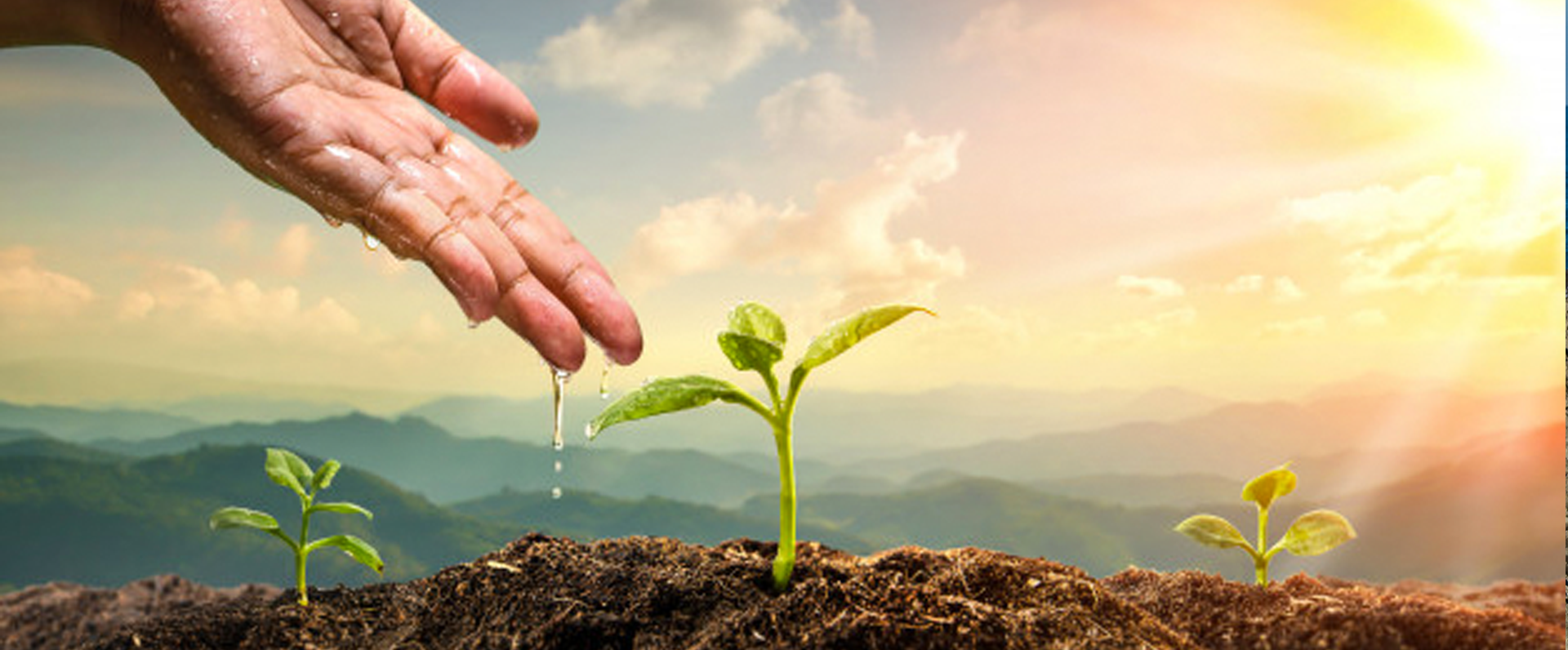
These findings suggest that the perception of soil as a mere support for human activities is still deep-rooted. However, its involvement in the sustainability of the ecosystem is crucial, and so is its future role in creating a more sustainable planet.
Why is soil important?
Firstly, and before describing the value and benefits of the soil, we should define exactly what makes up this natural resource.The soil is the top layer of the Earth's crust. The soil is the end product of the combined influence of climate, topography, organisms (flora, fauna and human) on parent materials (original rocks and minerals) over time.
This process, known as weathering, happens extremely slowly. For example, it takes between 1,000 and 10,000 years for a 30-centimetre layer of topsoil to form. This means that soil is a non-renewable resource, at least from the perspective of a human timescale.
Soil function
Soil is not as spectacular as the transformation of a forest through the seasons. Soil loss may not inspire same anguish as the lack of other resources such as water. However, life on the planet cannot survive without healthy soil.As a natural resource, soil is far more than a surface to walk on or on which to build cities
It is an essential component of ecosystem and environmental services, that is, the benefits that a society gains from the proper functioning of natural mechanisms (oxygen, water, etc.).In the specific case of this asset, Trujillo-González, Mahecha and Torres-Mora (2018) and Burbano (2016), draw attention to the following:
- Biomass and food production, considering soil as the starting point of the food chain. After all, it supports and provides nutrients for plants, and is one of the areas targeted for improvement by the European Green Pact.
- Development of biogeochemical cycles that support cycling of nutrients (carbon, phosphorus, nitrogen, etc.)
- Regulation of the water cycle, helping to capture, filter and store this scarce resource.
- Source of raw materials like gravel and sand, used for construction.
- A biodiversity reserve, containing vast numbers of organisms that make the soil itself a living being that actually makes human life possible.
- Archaeological heritage site, whose remains reveal the history of civilizations.
- Carbon sink, absorbing carbon, an element that is contributing to global warming, from the atmosphere. The carbon flows in and is fixed by mechanisms such as photosynthesis in plants.
The main threats to soil
Therefore, there is no question that soil is extremely important to human life. However, unfortunately, soils are being threatened with damage from many directions.Soil loss, in general, can be triggered by:
- Erosion caused by the effects of wind and weather.
- Depletion in situ
.jpg)
- Erosion, where the topsoil on bare ground is worn away by the effects of weather. Natural surfaces lacking vegetation are unable to retain or hold the topsoil, making deforestation is one of the main causes of erosion. What is more, the impact of erosion goes beyond the surface layer, and it can also cause landslides.
- Another problem, compaction, occurs when soil is compressed by the sustained use of heavy machinery or animals. It has adverse effects on crop production because it causes low availability of oxygen in the soil and stunts root growth.
- Artificialisation and soil sealing processes are closely linked to the water cycle. This is no surprise, since a watertight surface (asphalt, for example) reduces the infiltration capacity and increases runoff, hence increasing the risk of flooding.
- Soil becomes acidic when the chemical properties of the substrate change and its pH falls below 5. In the Basque Country, the main causes of this problem are pollution from emissions produced by industry, traffic and power plants.
- Pollution, which is one of the main problems in the region, is discussed under the following heading.
The situation of soils in the Basque Country
Soil degradation from pollution occurs when the level of harmful chemicals in the substrate endangers biodiversity and even human health. The region has been highly industrialised for centuries, the legacy of which has been a significant environmental impact which still affects the soil.For example, according to the Basque Environmental Profile 2020-Soil, 75% of potential land contamination is related to a heterogeneous set of industrial and commercial activities such as metallurgy, vehicle maintenance and repairs, and the chemical industry, while the remaining 25% is due to waste tips which contain mainly inert and industrial waste.
The economic impact of soil contamination
Soil contamination can diminish its capacity to provide ecosystem services as a natural resource. However, very few studies have made a quantitative analysis - that is to say calculated from a monetary point of view - of the cost of this loss.Nevertheless, there are indicators that give an objective idea of the costs of contaminated soil management. One of these is the estimated cost of preventing, controlling, researching and, where appropriate, sanitising land registered in the Inventory of Polluting Activities and Potentially Contaminated Sites. In the case of the Basque Country, this figure will be more than EUR 1 800 million by 2050, equivalent to EUR 18,4 per capita (2018) compared to the estimated EUR 10.7 average in Europe (2014).
Most of this money, around 78%, is spent on recovery that enables potentially contaminated sites to be put back on the market after the appropriate work (excavation, on-site and ex-situ remedial treatments, etc.). The remaining percentage is earmarked for research. This activity has led to the development of a growing scientific community working to gain a deeper understanding and to study new soil recovery technologies.
Prevention, control and monitoring, three key factors to ensure soil conservation
Over the last few years, policies and programmes designed and implemented to identify and correct pollution problems have improved the situation. However, in 2018, the Basque Country still had a density of 8.1 potentially contaminated sites per km2 of artificialised land, higher than the 7.7 identified in Germany, for example.It is quite clear that there is no option but to correct the mistakes and malpractices of the past. However, soil conservation will not be complete without prevention.
Control and monitoring are therefore two key components of soil conservation. Tools such as preliminary and periodic status reports, integrated environmental authorisations and periodic soil and groundwater quality monitoring are therefore be essential to ensure its viability. After all, anticipating potential impacts and taking the pertinent preventive measures to minimise their occurrence is less costly than acting later.
Conclusion
For centuries, the soil has been treated as a mere recipient of waste and spills. This carelessness, coupled with ignorance of its role in ecosystems, has sometimes depleted its ability to provide food, water and shelter.
The immediate future, marked by a growing global population under the stress of climate change, makes it necessary to address numerous challenges entailing paying proper attention to the soil.
We must therefore continue to learn more about soil as a natural resource. We must also prioritise research and investment to develop techniques and procedures to recover degraded areas and create new business opportunities. In addition, we must continue to insist on the adoption of legislation and programmes to protect it from damage. Last but not least, we must raise public awareness and inform social and economic actors of the need to protect the soil.
Dr Charles E. Kellogg, chief of the United States Department of Agriculture (USDA) said that Essentially all life depends on the soil. There can be no life without soil and there is no soil without life; they have evolved together." And ensuring that this evolution develops within the channels of conservation and sustainability will enable future generations to meet their needs as well.
Iturria:Ihobe